Rakow Research Library, Corning Museum of Glass
Corning, New York
The Rakow Library provides a flexible home for the world’s preeminent repository on the history and technology of glass.
Project Information
SIZE
43,500 square feet
COMPLETED
2000
AWARDS
AIA Pennsylvania Honor Award
AIA Pittsburgh Honor Award
AIA NEPA Honor Award
PRESS
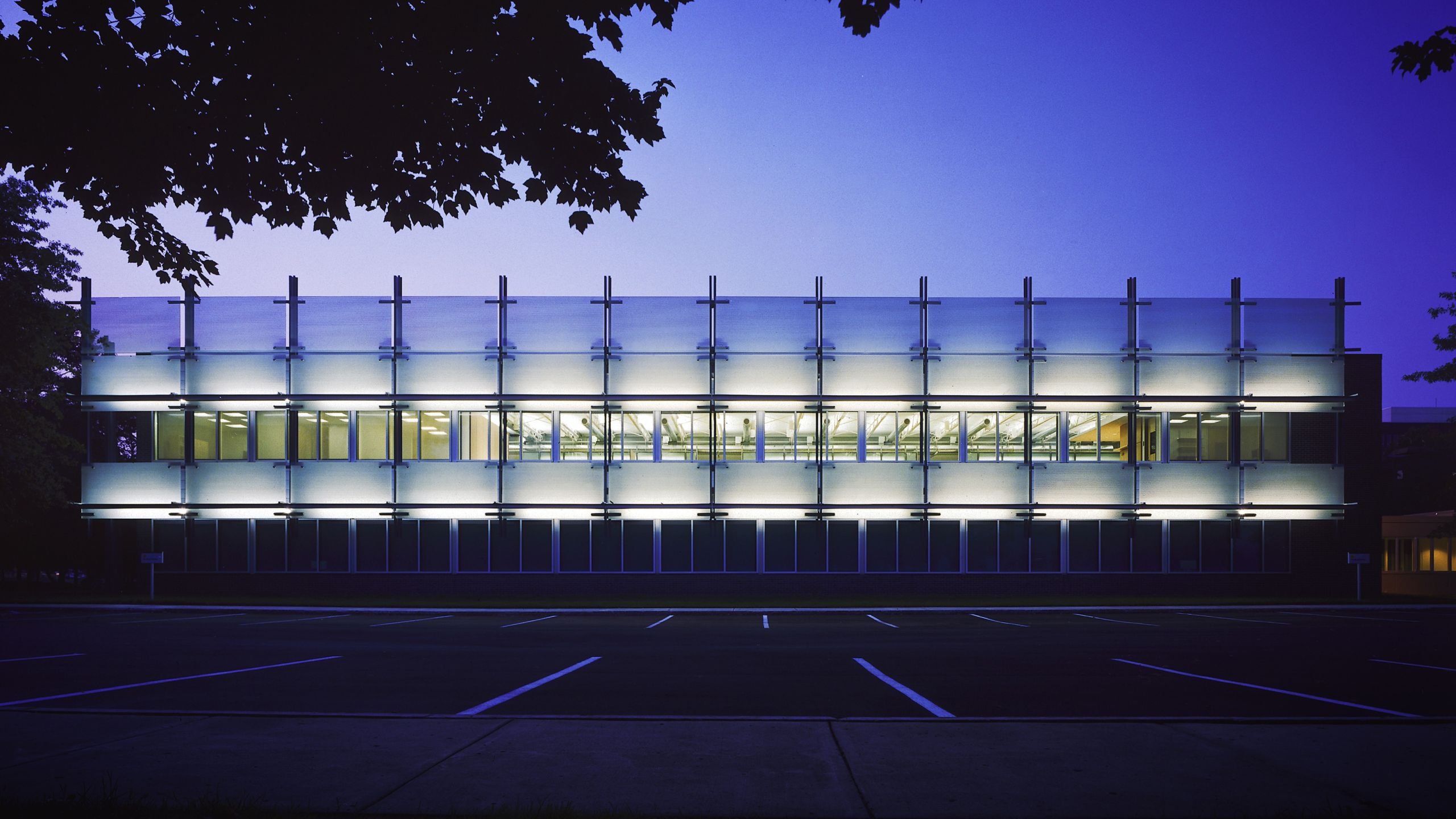
The Corning Museum of Glass was established in 1951 by Corning Glass Works (now Corning Incorporated) to commemorate the company’s 100th anniversary. While the Museum’s unique collection — the world’s most comprehensive collection of glass — was originally housed within its main building, continual expansion created the need to relocate the collection to a dedicated facility. After various settings on campus were evaluated, the Library was relocated within the shell of a vacant 1966 office building— a choice dictated by the advantages of its location and the expansion opportunities available.
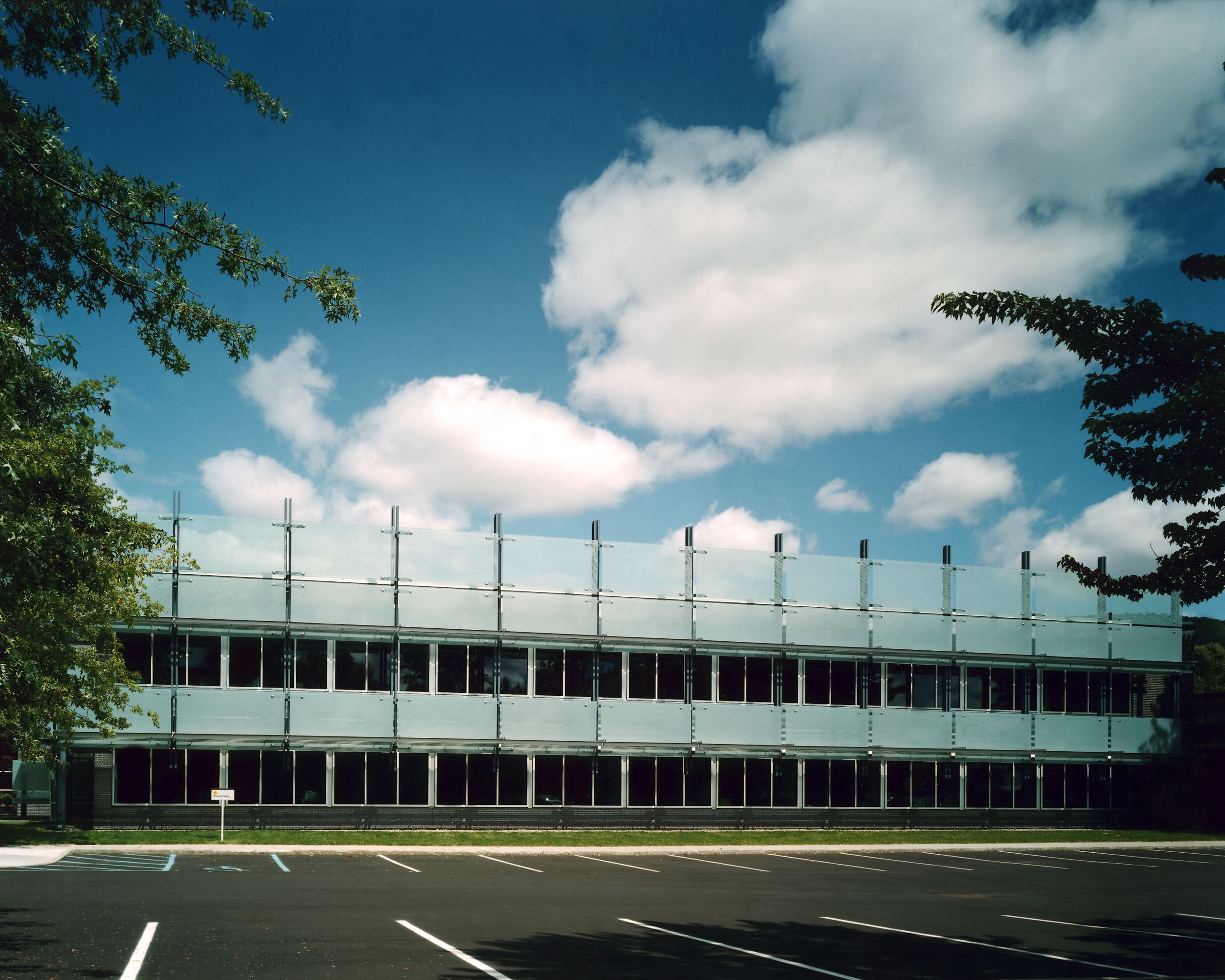
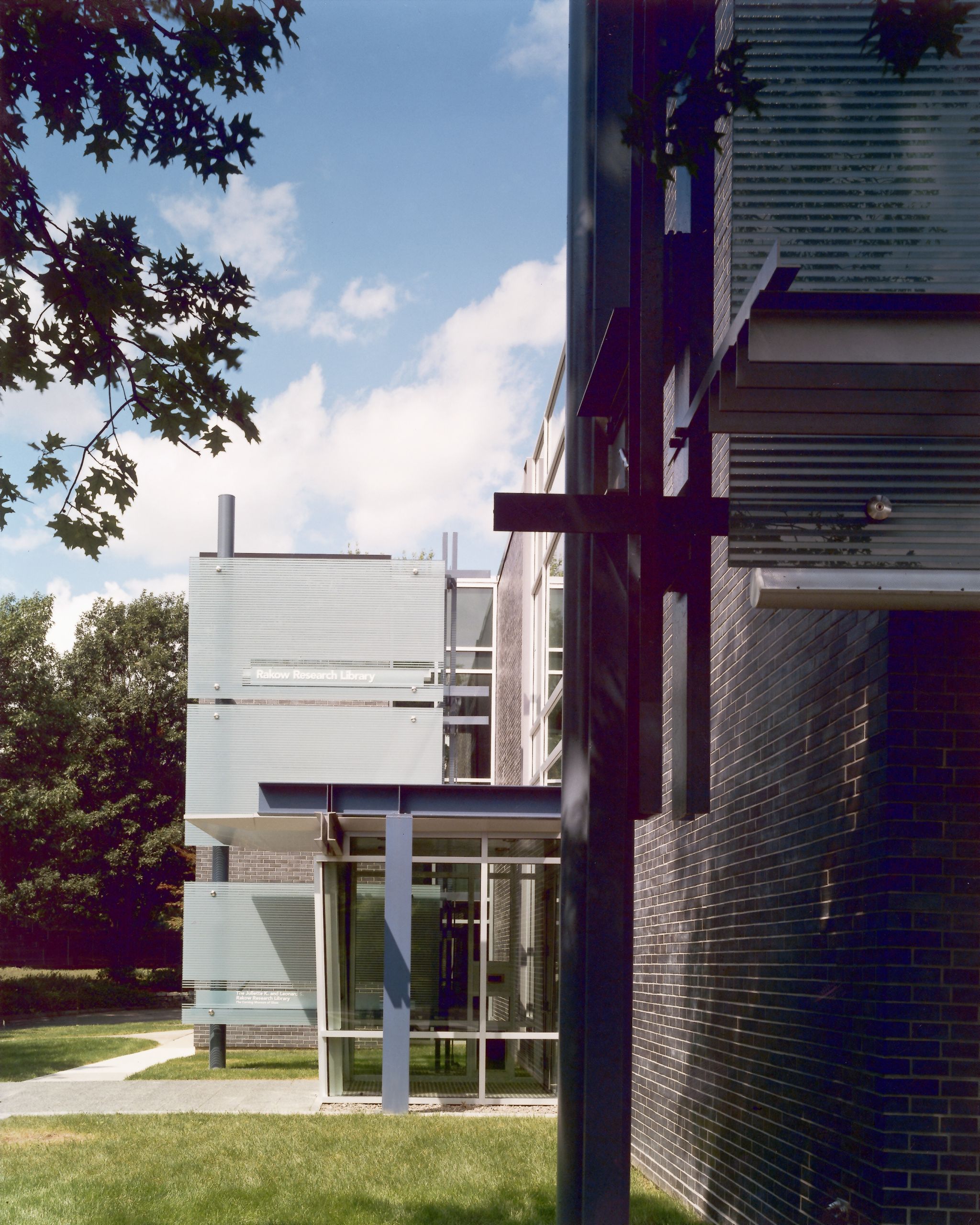
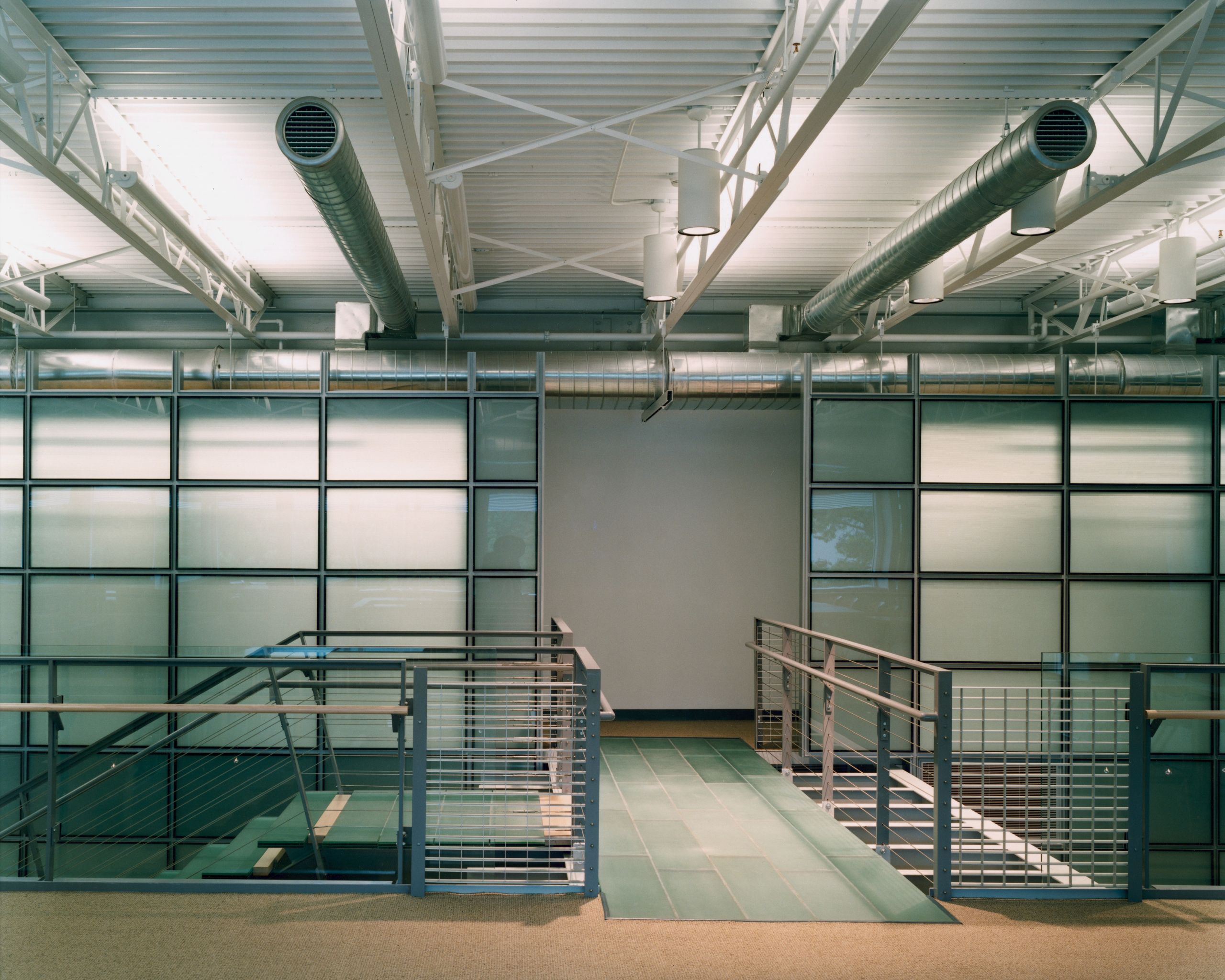
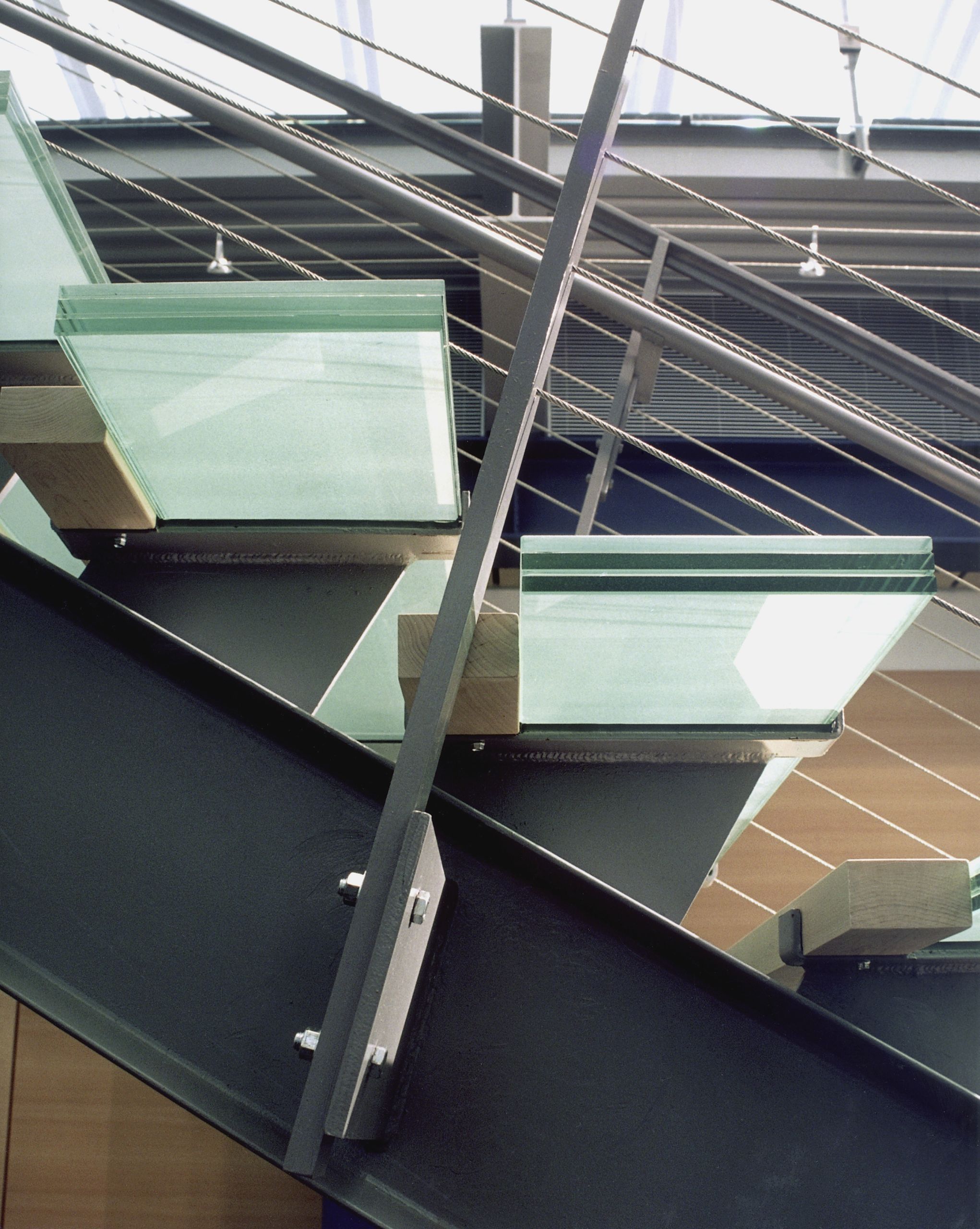
The renovation took the form of a radical reconstruction, including significant reinforcement of the steel structure to permit future installation of compact shelving. This restructuring process afforded several design opportunities, including creating openings in the second floor to link upper and lower levels. The new library’s architecture celebrates glass, thematically relating the building to its library subject and to the Museum’s nearby Glass Center. Extraordinary glass detailing characterizes the “building within a building” which houses the collection, as well as special features such as glass stairs and bridges. South-facing reading areas enjoy views of the nearby Chemung River through a glass sunscreen. This screen serves as a large “environmental sculpture,” transforming the character of the former office building. Its metallic and etched linear patterns interact with seasonal sun angles to maximize visual transparency while excluding direct sunlight from the library’s interior.